Why Temporal Video Data Is Essential for Behavior Recognition AI
Many AI systems can identify what is happening in a single frame, but struggle to understand what is unfolding over time. For behavior recognition, context is not static. Actions begin, evolve, pause, and resolve, often in subtle ways that only video data can capture.
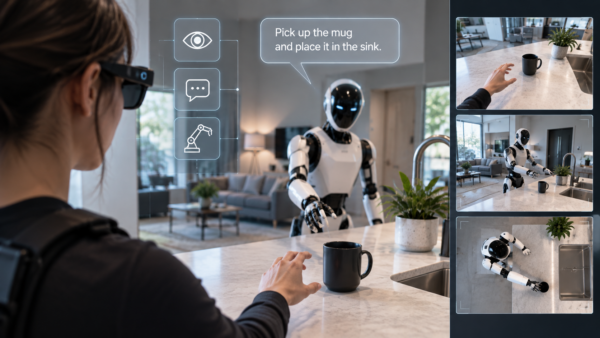
Temporal video data allows models to learn sequences rather than snapshots. This distinction is critical for robotics, autonomous systems, and human-machine interaction frameworks that rely on anticipating outcomes, not just reacting to visual inputs.
Behavior Is Defined by Transitions
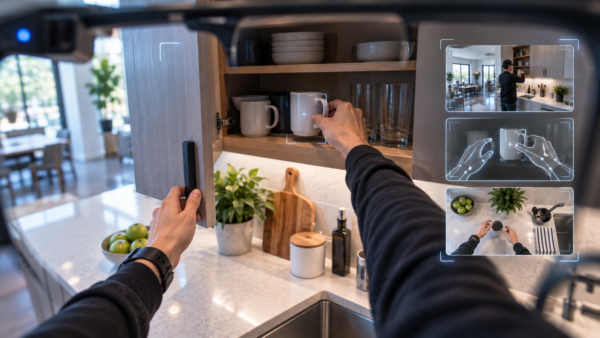
Human behavior is rarely a single action. A task may involve preparation, execution, adjustment, and completion. Without video sequences that capture these transitions, AI systems miss the intent behind movement.
Temporal data enables models to recognize not only what action is occurring, but what is likely to happen next. This improves responsiveness, safety, and collaboration when AI systems operate alongside people.
Timing Improves Decision-Making Models
The timing between movements, pauses, and interactions carries meaning. Hesitation, repetition, or sudden acceleration can indicate uncertainty, correction, or urgency. These cues are invisible in static datasets.
Video-based temporal training helps systems interpret these patterns, leading to better decision-making in robotics applications such as navigation, assistance, and task execution.
Reducing Misclassification in Real Environments
Without temporal context, AI systems often misclassify partial actions or momentary poses. Video data reduces this risk by providing continuity across frames, allowing models to validate predictions over time rather than relying on isolated signals.
This is especially important in environments with overlapping actions, moving crowds, or complex object interactions.
Training AI to Understand Actions, Not Just Images
Effective behavior recognition requires datasets that reflect how actions actually occur in the real world. High-quality temporal video data exposes AI systems to realistic variability, including mistakes, interruptions, and environmental interference.
MatchPoint AI supports teams building behavior recognition and robotics systems by designing video data collection pipelines that capture real-world actions as continuous, meaningful sequences, enabling models to perform reliably beyond controlled settings.