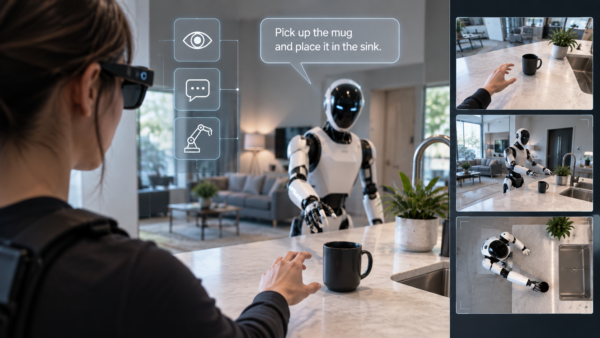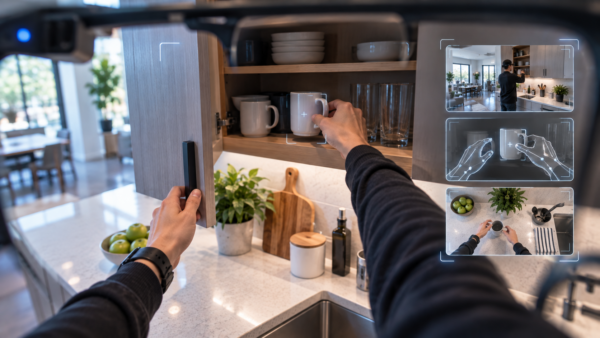
Embodied AI systems learn from interactions with the physical world, not just from text, images or static datasets.
Their training data can include sensor streams, human or operator demonstrations, robot states and the results of physical actions. That makes data collection for robotics fundamentally different from traditional NLP or standard computer vision projects.
It also makes choosing the right data partner especially important.
A poorly matched vendor can create problems ranging from misaligned sensor timestamps to annotation schemas that do not correspond to a robot’s action space. Data collection in homes, workplaces or public environments can also introduce privacy and compliance risks if people, license plates or other identifying information are captured unintentionally.
This directory looks at several embodied AI data vendors through the capabilities robotics teams should evaluate most closely, including sensor modality support, annotation depth, workflow ownership and compliance.
Types of Embodied AI Data Vendors
Providers in this market generally fall into four broad categories:
- End-to-end physical AI platforms that manage collection through annotation
- Annotation specialists that process sensor data collected by your team
- Human-in-the-loop collection and labeling platforms
- Infrastructure providers that connect different pieces of the robotics data pipeline
Understanding which role a company actually plays can make the RFP process significantly easier.
A vendor with excellent annotation infrastructure may not operate teleoperation rigs.
A strong collection provider may not offer the annotation depth required for complex sensor fusion.
The best choice depends on which part of the data pipeline your team needs help solving.
Embodied AI Data Vendor Directory
Scale AI
Scale AI positions its Physical AI offering as an end-to-end data engine supported by a global collection network for robotics data.
Its approach reflects one of the central realities of embodied AI: useful robotics training data often needs to be intentionally created rather than scraped from existing sources.
For robotics teams, Scale can support areas such as teleoperation-based manipulation data, physical AI data collection and annotation infrastructure.
Best fit: Enterprise-scale teams looking for broader end-to-end physical AI support.
Compliance questions to ask: Request a Data Processing Agreement, subprocessor documentation and data residency policies during procurement.
Verify during scoping: Exact support for RGB-D, LiDAR, force/torque and other modalities, as well as synchronization requirements and coordinate-frame conventions for your robot.
Encord
Encord positions itself as an AI-native data infrastructure platform supporting physical AI and robotics workflows.
Its published capabilities include data collection, curation, annotation and alignment across sensor streams, video and text.
That multimodal infrastructure can be useful for robotics teams working with complex datasets, although the exact division between raw hardware collection and tooling should be clarified early in the process.
Best fit: Multimodal robotics data curation and annotation infrastructure.
Verify during scoping: Whether Encord manages physical capture, provides tooling for internal capture workflows or supports both. Teams should also ask about synchronization precision, point-cloud support and IMU alignment.
iMerit
iMerit offers robotics and physical AI data collection and annotation services with an emphasis on enterprise workflows.
Its public positioning includes egocentric video, multimodal datasets and compliance-related processes, making it worth evaluating for manipulation and human-demonstration programs.
Best fit: Robotics programs requiring enterprise annotation and egocentric video support.
Compliance questions to ask: Request DPA documentation and details about anonymization and quality-assurance procedures.
Verify during scoping: Confirm how each sensor modality maps into the proposed annotation schema and ask for example deliverables using a sensor stack similar to your own.
Sama
Sama provides human-in-the-loop annotation and validation services for computer vision and multimodal applications, including robotics and physical AI.
Its strongest role is generally downstream of capture, where complex robotics sensor data needs to be labeled, validated and reviewed.
Teams should determine whether their project requires an annotation specialist or a provider capable of managing physical collection and teleoperation as well.
Best fit: Complex annotation and validation for robotics data your team has already captured.
Verify during scoping: Determine whether Sama supplies physical or teleoperation capture systems or primarily works with sensor streams provided by the client.
Toloka
Toloka supports human-in-the-loop data workflows and has published robotics-specific materials covering collection and annotation.
Its capabilities include temporal and frame-level labeling, which can be useful for action-oriented datasets where events need to be identified across time rather than within isolated frames.
Best fit: Scalable robotics annotation, temporal labeling and human-in-the-loop workflows.
Verify during scoping: Clarify which modalities Toloka can collect directly versus which it accepts as client-provided data. Ask for documentation around QA methodology and acceptance criteria.
Appen
Appen provides large-scale human-in-the-loop data collection and annotation services that can be applied to robotics and physical AI.
For embodied AI programs, its scale and collection infrastructure can make it relevant for demonstration datasets and projects involving large participant groups.
Best fit: Large-scale human demonstration collection and annotation.
Verify during scoping: Sensor coverage, consent procedures, bystander policies and support for robotics-specific hardware or teleoperation workflows.
Shaip
Shaip also provides data collection and annotation services and includes physical AI and teleoperation applications within its positioning.
That makes it another provider worth evaluating for human demonstrations and robotics datasets requiring structured collection at scale.
Best fit: Human demonstration and physical AI data programs that may incorporate teleoperation.
Verify during scoping: Confirm supported sensors, teleoperation hardware requirements, participant management processes and procedures for handling incidental personal data.
What Sensor Support Actually Means
Embodied AI datasets can combine several different sensor types, and vendors do not always mean the same thing when they say they “support” a modality.
RGB Cameras
RGB video captures visual appearance, environmental context, objects, people and actions.
It remains foundational for many robotics and embodied AI datasets.
Depth and RGB-D Cameras
Depth sensors add information about physical geometry and distance.
That can be especially important for manipulation, grasping, obstacle avoidance and spatial understanding.
LiDAR and Point Clouds
LiDAR provides three-dimensional information that can support navigation, mapping and longer-range environmental perception.
IMU Data
Inertial measurement units record motion and orientation information.
IMU streams may be particularly useful for locomotion, teleoperation and datasets where motion needs to be aligned with visual observations.
Force/Torque and Tactile Sensors
Force, torque and tactile data capture what happens when a robot physically contacts an object.
These modalities become especially important for manipulation tasks such as grasping, pushing or handling delicate objects.
Questions to Ask About Sensor Modalities
A vendor saying it “supports LiDAR” or “supports RGB-D” does not necessarily tell you how that data will move through its pipeline.
Support could mean anything from receiving raw logs to producing processed outputs.
During an RFP, ask:
- Can the vendor ingest raw sensor logs?
- Are processed streams required?
- How are timestamps synchronized?
- What maximum clock drift is accepted?
- Which frame rates are supported?
- How are coordinate systems defined?
- How is sensor calibration documented?
- Are raw and processed versions both delivered?
Different robotics applications will prioritize different combinations.
Bimanual manipulation projects may require tightly synchronized RGB-D, pose and force/torque streams.
Navigation datasets may prioritize LiDAR, point clouds and aligned IMU information.
Locomotion and teleoperation programs may require RGB, IMU and pose information synchronized to a common clock.
How Much Annotation Depth Does Embodied AI Require?
Traditional image-labeling projects may rely heavily on 2D bounding boxes and object categories.
Embodied AI often requires substantially more information.
Depending on the application, annotation may include:
- Temporal synchronization across sensor streams
- Keypoints
- Pose estimates
- 3D bounding boxes
- Action segmentation
- Operator intent
- Grasp types
- Affordances
- Contact events
- Instruction-to-demonstration links
For manipulation datasets, teams may also need labels that describe how and when an object was touched, grasped, moved or released.
When language conditioning is involved, instructions may need to be associated with the corresponding episode or physical sequence.
The ABC-130K teleoperation dataset referenced in robotics research demonstrates the scale and complexity of bimanual manipulation data now being explored in mature embodied AI datasets.
Ask for an Annotation Schema Before Signing
Do not rely solely on a vendor’s marketing descriptions.
Ask for a representative annotation schema before committing to a project.
That sample should make it possible to evaluate whether the proposed taxonomy actually aligns with your robot’s behaviors and downstream training pipeline.
Quality-control procedures should also be clearly defined.
Questions worth asking include:
- How is inter-annotator agreement measured?
- How are ambiguous labels resolved?
- Are contact labels reviewed for physical plausibility?
- What are the acceptance thresholds?
- How are rejected annotations handled?
- Are error and rejection rates reported?
For embodied AI, annotation quality is not simply a question of whether a box was drawn correctly.
The labels need to represent what physically happened.
Privacy and GDPR Considerations for Robotics Data
Egocentric cameras and robot-mounted sensors rarely capture only the intended task.
They may also record:
- Faces
- Homes
- Offices
- Computer screens
- License plates
- Workers
- Visitors
- Personal belongings
- Other identifying information
Even a warehouse manipulation dataset may unintentionally capture people moving through the background.
That makes privacy planning an important part of robotics data collection.
A practical compliance framework may include:
- Documented participant consent
- Bystander procedures where appropriate
- Data minimization
- Face and license-plate masking
- Secure storage
- Controlled access
- Data-subject access and deletion procedures
- Chain-of-custody documentation
- Subprocessor transparency
- Data residency documentation
- Defined retention and deletion schedules
For vendors without clearly published compliance programs, teams should request a signed DPA, subprocessor list, anonymization process and retention policy before contracting.
Choosing a Vendor for Teleoperation and Manipulation
For teleoperation and manipulation projects, ask:
- Can the provider capture synchronized RGB-D, pose and force/torque streams?
- Does the vendor collect those signals or only annotate logs your team provides?
- What clock source is used for synchronization?
- What level of drift is permitted?
- Are grasp labels available?
- Are contact events labeled?
- Is action segmentation supported?
- Does the provider operate teleoperation hardware?
- Does your team need to supply the robot and rig?
For these projects, small synchronization errors can become much more consequential than they would be in conventional image datasets.
Choosing a Vendor for Navigation and Mapping
Navigation projects typically require a different data profile.
Questions may include:
- Can the vendor ingest LiDAR point clouds?
- Are IMU logs supported?
- How are pose and sensor streams aligned?
- Can mapping data be synchronized with video?
- Can failure cases be documented?
- Are near-misses, collisions and recovery behaviors labeled?
Navigation data should capture not only where a robot successfully travels but also what happens when environmental conditions create problems.
Choosing a Vendor for Egocentric and Human Demonstration Data
First-person and human-demonstration projects introduce additional privacy and licensing considerations.
Ask:
- How is participant consent documented?
- What happens when bystanders enter the footage?
- Are faces automatically masked or manually reviewed?
- How are license plates and other identifying details handled?
- Who owns the resulting footage?
- What reuse rights does the vendor retain?
- Is the dataset compatible with retargeting to multiple robot morphologies?
For human-demonstration programs, the data itself may remain useful across several generations of robotic hardware, making licensing and ownership particularly important.
Five Areas to Compare Across Vendors
For most embodied AI RFPs, evaluate providers across five core dimensions:
- Sensor modality fit
Can the provider actually work with the sensor stack your project requires? - Annotation schema fit
Do the labels reflect your robot’s action space and model requirements? - Sample data availability
Will the vendor provide representative data or example outputs before signing? - Compliance maturity
Are consent, privacy, retention and subprocessor procedures clearly documented? - Delivery compatibility
Can the final dataset be delivered in formats your training pipeline can use without extensive conversion?
A vendor may perform extremely well in one area and still be the wrong choice if another part of the workflow does not match your needs.
Where MatchPoint AI Fits in the Embodied AI Pipeline
MatchPoint AI is best positioned as a real-world capture, production and compliance layer upstream of large-scale annotation.
Our role is to help robotics and AI teams design and execute structured visual data collection programs before the data reaches downstream annotation and training workflows.
That can include:
- Capture planning
- Camera and perspective selection
- Egocentric video collection
- Multi-angle activity capture
- Participant management
- Repeatable task direction
- Visual quality control
- Metadata planning
- Privacy workflows
- Secure dataset packaging
MatchPoint AI’s collection process can also incorporate participant consent workflows, data-subject access and deletion tracking, GDPR-oriented project oversight and secure delivery with chain-of-custody documentation.
For data minimization, incidental personal information such as faces and license plates can be addressed before downstream annotation teams receive the dataset.
The model is straightforward:
Use specialized robotics annotation providers when deep, large-scale labeling is required.
Use MatchPoint AI to make sure the source data is intentionally captured, visually usable, documented and prepared for compliant downstream processing.
Those functions complement one another.
Strong annotation cannot fully compensate for footage that was poorly framed, inconsistently captured or missing important physical interactions.
Likewise, excellent source data still requires the right annotation strategy before it becomes training-ready.
Choosing the Right Embodied AI Data Partner
There is no single best data vendor for every robotics project.
The right provider depends on which part of the pipeline presents the biggest challenge.
Some teams need end-to-end physical AI infrastructure.
Others already have sensor logs and need sophisticated annotation.
Some need human-in-the-loop collection at scale.
Others need professionally managed egocentric capture with strong privacy and production controls.
The important part is defining those needs before choosing a provider.
For robotics teams, vendor selection should come down to the same question driving the dataset itself:
What does your model actually need to learn, and which partner is best equipped to capture, structure or label that information correctly?