Why Robotics Training Fails Without Real-World Video Data
Robotics and autonomous systems often perform well in controlled environments but struggle once deployed in real-world conditions. One of the primary reasons is a lack of high-quality, real-world video data during training. Simulated and synthetic datasets are valuable, but they cannot fully capture the unpredictability, variability, and nuance of human behavior in physical environments.
Video data provides temporal context that static images cannot. Movement patterns, timing, object interaction, and spatial awareness all unfold over time. Without exposure to authentic motion and behavior, models tend to overfit to idealized scenarios and fail when confronted with real human activity.
Human Movement Is Not Static
Human motion is complex. Walking paths change. Posture shifts mid-task. Hands adjust grip without conscious intent. These micro-behaviors are difficult to model synthetically but are critical for robotics systems that must operate alongside people.
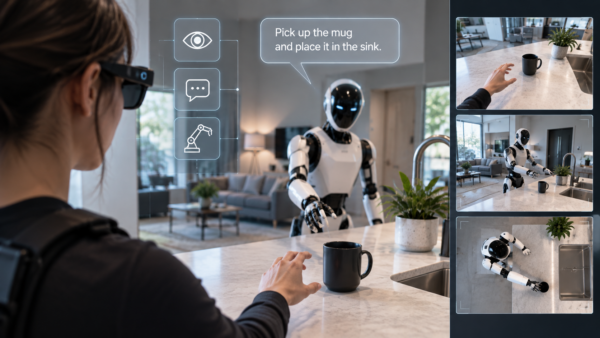
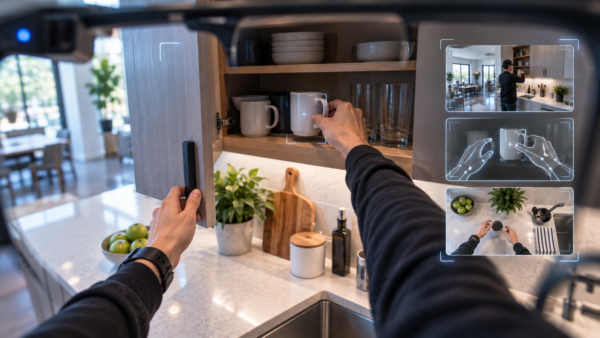
Multi-angle video capture allows AI systems to learn how movement looks from different perspectives, improving robustness in perception models. This is especially important for humanoids, collaborative robots, and navigation systems that rely on continuous visual feedback rather than isolated frames.
Object Interaction Requires Context, Not Just Labels
Object manipulation is another common failure point in robotics training. Knowing what an object is does not explain how humans interact with it. Video data captures approach, grasp, adjustment, and release, including failed attempts and corrections.
Training models on real-world task execution helps systems understand sequences rather than single actions, which is essential for applications in logistics, manufacturing, healthcare, and service robotics.
Real Environments Expose Edge Cases Early
Lighting changes, partial occlusions, background motion, and environmental noise all influence how AI systems interpret the world. Video captured in real environments exposes these challenges during training instead of after deployment, reducing costly retraining cycles.
This is particularly relevant for navigation and spatial awareness models, where even small perception errors can cascade into system-level failures.
Building Better Video Datasets
High-quality robotics training data requires more than turning on a camera. It demands intentional capture design, consistent execution, synchronized perspectives, and rigorous quality control. When done correctly, video datasets become a powerful foundation for building AI systems that translate from research to reality.
MatchPoint AI supports teams building robotics and autonomous systems by designing and executing professional video data collection in real-world environments, ensuring datasets reflect the complexity models will face in deployment.